
Introduction
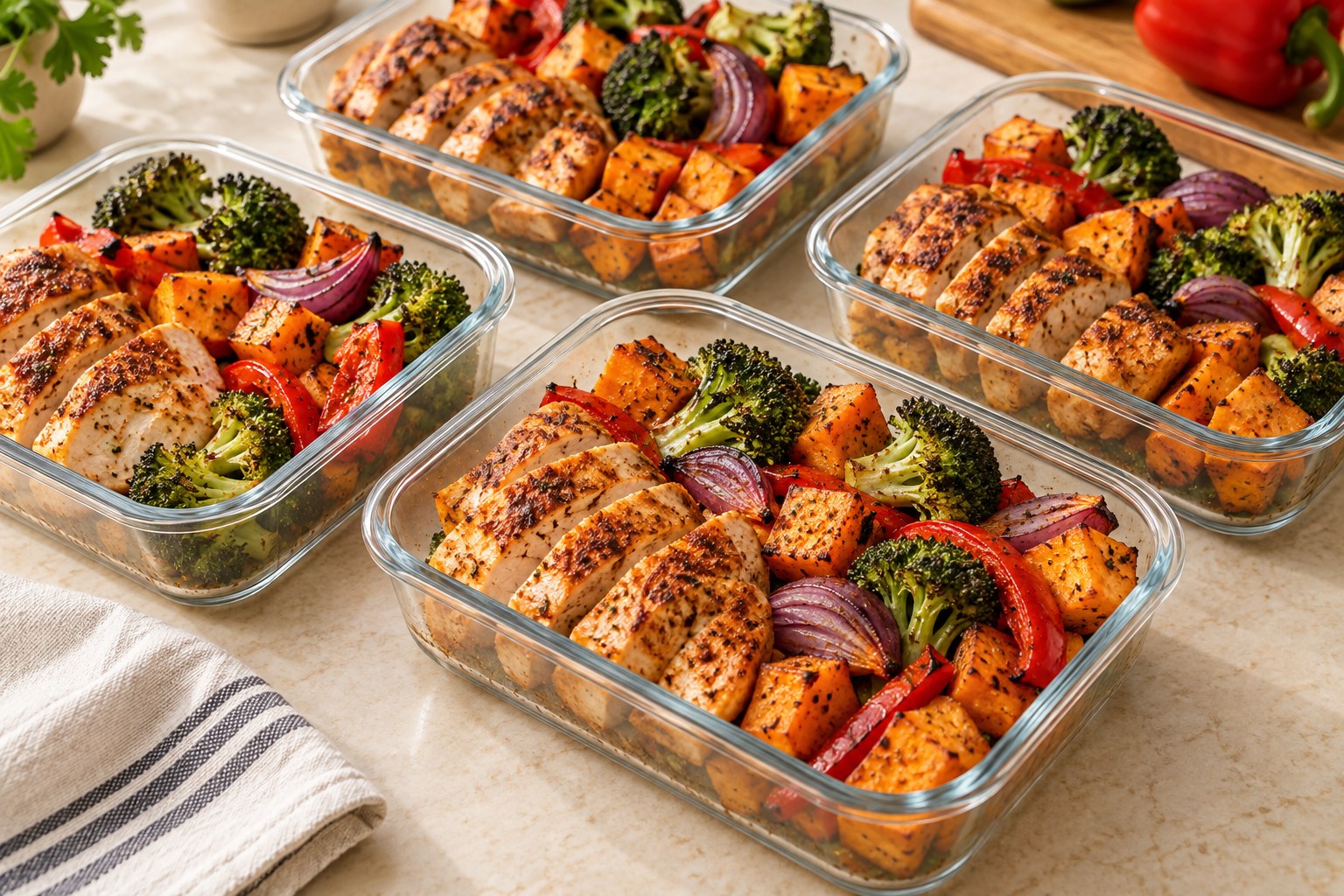
This sheet-pan recipe combines chicken and sturdy vegetables that hold their texture during several days of refrigeration. Two pans prevent crowding and help the ingredients roast instead of steam.
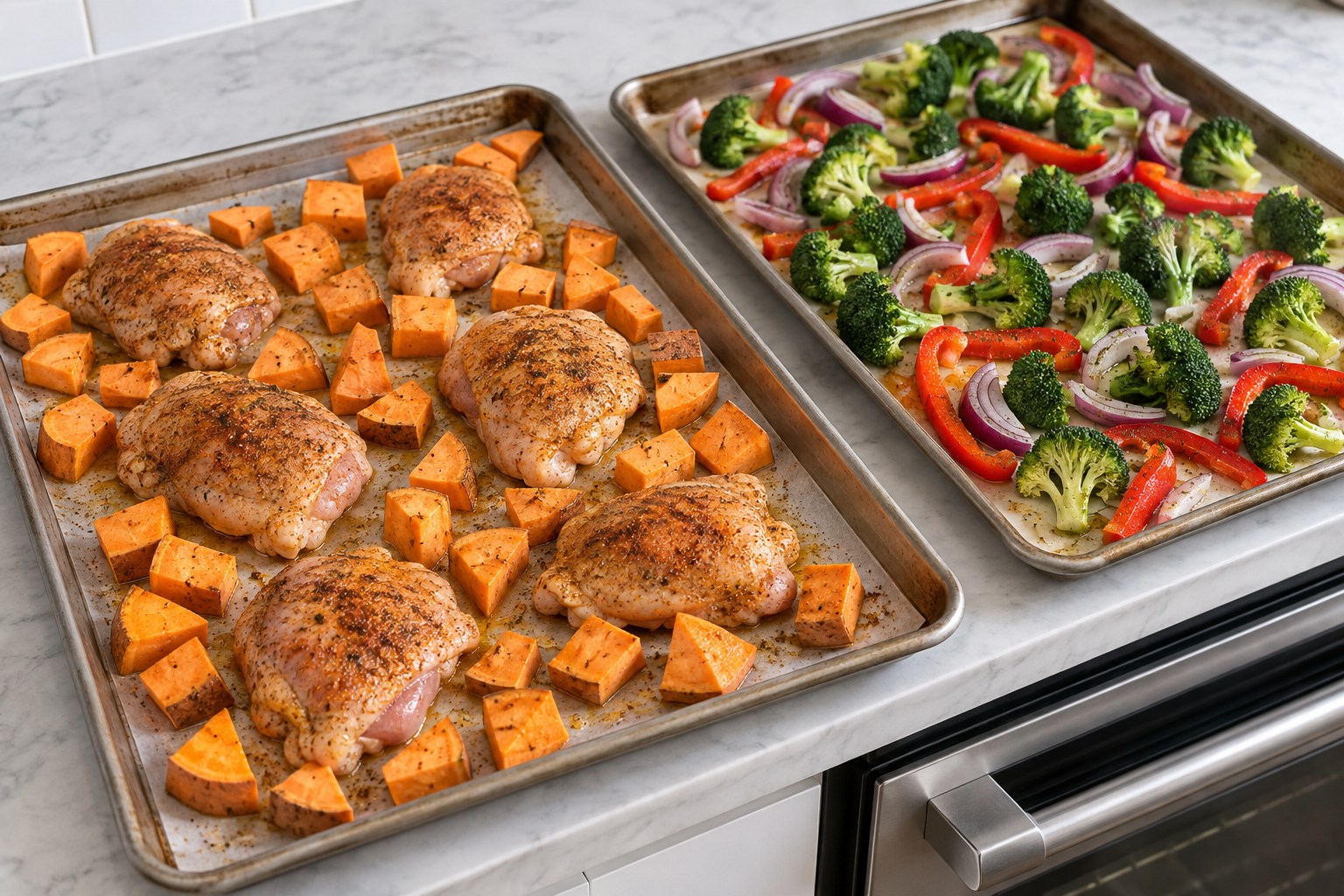
Sweet potatoes begin roasting before chicken and faster vegetables. Two sheet pans prevent crowding: one carries sweet potatoes and chicken, while the second holds broccoli, peppers, and onion. Rotating the pans promotes even browning, and the food is cooled promptly before being divided into five containers.
With 20 minutes of preparation and about 30 minutes of cooking, Meal Prep Sheet-Pan Chicken and Vegetables is most useful when the ingredients are organized before heat is applied. The recipe yields 5 portions and focuses on a repeatable home-kitchen workflow rather than unsupported claims about testing, nutrition, or universal preferences.
Why You’ll Love This Recipe
The oven handles most of the cooking, and the finished components divide easily into five containers. The seasoning is versatile enough for different sauces at serving time.
- A method with a clear sequence. The 20-minute Meal Prep Sheet-Pan Chicken and Vegetables preparation and 30-minute cooking stages have separate jobs, so ingredients can be measured and cut before heat is applied. That organization makes the timing realistic without pretending that preparation happens instantly.
- Texture is built deliberately. Sweet potatoes begin roasting before chicken and faster vegetables. The recipe does not rely on a heavy finishing sauce to hide overcooked meat, soggy vegetables, or poorly handled grains.
- The Meal Prep Sheet-Pan Chicken and Vegetables ingredient list has a purpose. The main seasonings, vegetables, and finishing ingredients support the central cooking method instead of appearing only for decoration. Each important ingredient in the measured list is used in the directions.
- Serving remains flexible. Reheat one container and finish with lemon, salsa, or a separately refrigerated yogurt sauce. The core recipe stays the same, while practical sides and toppings let it fit a weeknight dinner, packed lunch, or planned make-ahead meal.
- Leftovers have a plan. Cool roasted food promptly in shallow layers, then divide into five containers and refrigerate for up to four days. Separating hot, cold, crisp, or sauce-based components where necessary protects texture and makes reheating safer and more predictable.
Kitchen Tools You’ll Need
- two large rimmed sheet pans
- large mixing bowl
- cutting board
- chef's knife
- five meal-prep containers
Ingredients for Meal Prep Sheet-Pan Chicken and Vegetables
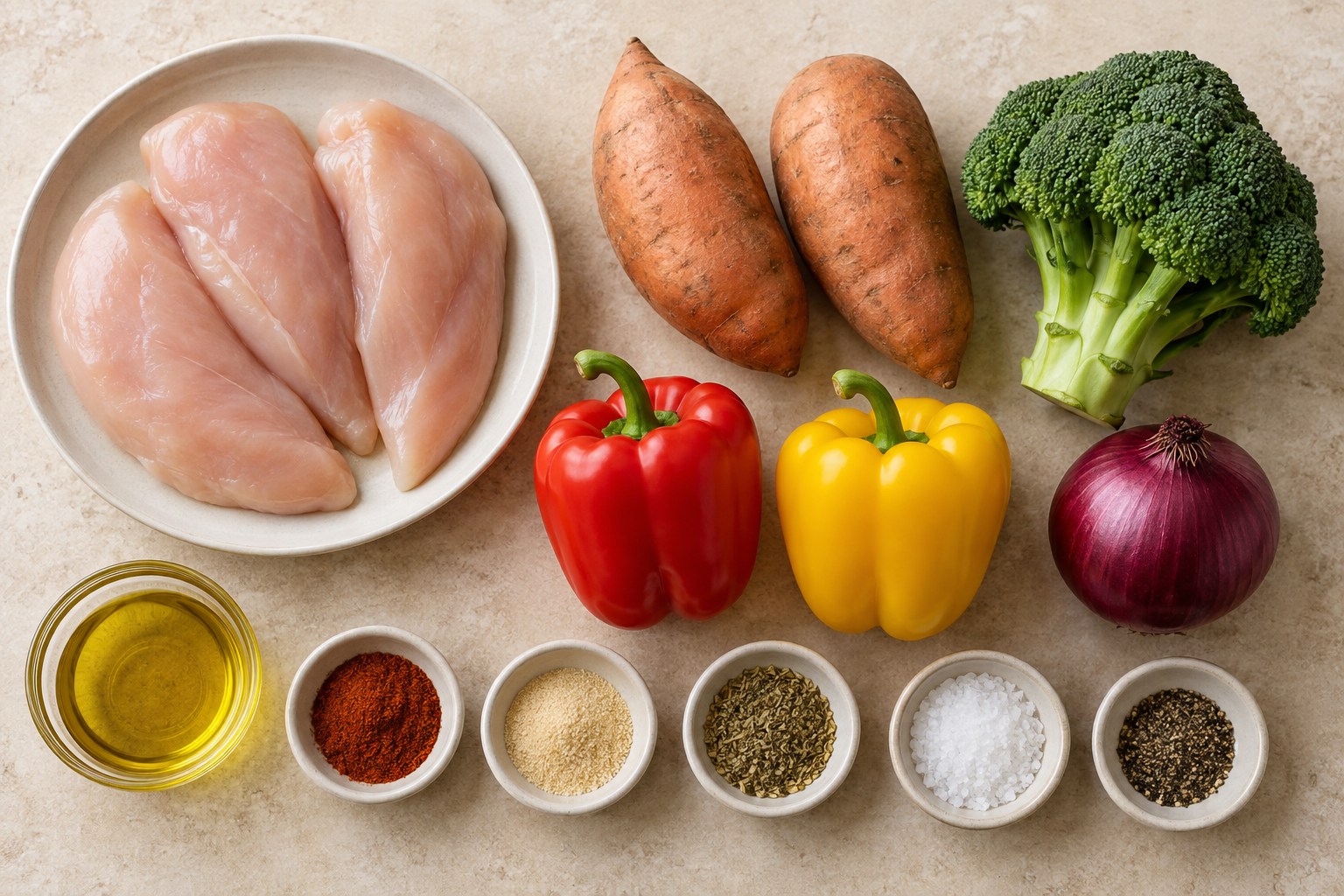
The measured Meal Prep Sheet-Pan Chicken and Vegetables ingredient checklist appears in the Recipe Card below. This discussion explains how the principal ingredients behave, which details affect the result, and where substitutions require care rather than treating every item as interchangeable.
Chicken breast is cut into larger even pieces so it remains moist during roasting. Sweet potatoes need small three-quarter-inch cubes and a head start because they are denser than the other vegetables. Broccoli florets, pepper strips, and onion wedges are sized to roast in the later shared window.
Olive oil is divided so every component receives a light coating without becoming greasy. Smoked paprika, garlic powder, oregano, salt, and pepper create a versatile seasoning suitable for several finishing sauces. Dry vegetables before oiling so moisture does not block browning.
Two pans are functional equipment, not an indulgence. A crowded single pan traps steam and makes chicken juices collect around vegetables. Separate loose layers allow hot air to circulate, improve color, and make it easier to remove a pan early if one group finishes first.
Read the complete Meal Prep Sheet-Pan Chicken and Vegetables list before starting and measure liquids, seasonings, and dry ingredients accurately. The recipe uses 11 listed ingredients, and the directions account for each one so nothing important is left unexplained on the counter.
How to Make Meal Prep Sheet-Pan Chicken and Vegetables
Heat the oven and line both pans, then cut sweet potatoes first and start their ten-minute roast. During that head start, season chicken and remaining vegetables. Add chicken to the first pan, spread vegetables on the second, rotate positions during cooking, and verify chicken at 165°F / 74°C before cooling and portioning.
The numbered Meal Prep Sheet-Pan Chicken and Vegetables directions below cover preparation, heat, cooking order, combining, finishing, and serving. Set out two large rimmed sheet pans, large mixing bowl, cutting board, chef's knife, five meal-prep containers before beginning, then follow the sequence rather than jumping ahead; several finishing ingredients are intentionally held back to protect texture or flavor.
Step 1
Heat the oven to 425°F and line two rimmed sheet pans. Complete this preparation before the pan or oven work moves forward. Keeping the pieces and measured ingredients organized is especially important for Meal Prep Sheet-Pan Chicken and Vegetables, because its 30-minute cooking window leaves little time to correct uneven cutting or a missing component later.
Step 2
Toss sweet potatoes with 1 tablespoon oil and one-third of the seasonings. Roast for 10 minutes. Use the stated heat as a guide and adjust only enough to maintain steady cooking. Look for the described surface and texture changes rather than forcing color with excessive heat, and keep raw-poultry utensils away from ingredients that will be served without further cooking.
Step 3
Toss chicken with 1 tablespoon oil and another third of the seasonings. Add it to the first pan with the sweet potatoes. Treat the listed time as a range rather than the only doneness test. Watch moisture, browning, and tenderness, and when poultry is involved confirm that the thickest piece reaches 165°F / 74°C before it is returned to the rest of the dish or served.
Step 4
Toss broccoli, peppers, and onion with the remaining oil and seasonings and spread on the second pan. Combine the components gently so the texture developed in the earlier steps is not lost. Scrape flavorful browned bits into the dish when appropriate, but reduce the heat if garlic, dairy, cheese, honey, or a thickened sauce could scorch or separate.
Step 5
Roast both pans for 18 to 22 minutes, rotating once, until the vegetables are tender and the chicken reaches 165°F / 74°C. Cool promptly and divide among five containers. Taste the finished dish before adding more salt, then make only small adjustments to acidity, seasoning, or moisture. Allow any stated resting time, divide into 5 portions, and add fresh garnishes or cold components only at the point described in the recipe.
Serving Suggestions
Reheat a portion and serve with lemon, yogurt sauce, salsa, or a cooked grain added separately.
Reheat one container and finish with lemon, salsa, or a separately refrigerated yogurt sauce. A small portion of quinoa or rice can be added for a larger meal, but the sweet potato already supplies a substantial base. Add fresh herbs only after heating so their color and aroma remain clear.
Plan for 5 servings of Meal Prep Sheet-Pan Chicken and Vegetables and portion the main components evenly before adding garnishes. If the dish includes both hot and cold elements, bring them together only at the table so reheating does not damage fresh textures.
Pro Tips for Best Results
- Use two pans so ingredients have space. Do it during the preparation window rather than after cooking has started; this protects the short active timing and makes the result more even.
- Cut sweet potatoes into small, even cubes. This small control helps the cookware stay at the intended temperature and prevents moisture from replacing browning or roasting.
- Rotate pans for even browning. The cue is more reliable than following the clock alone, because ingredient size, pan material, and burner or oven behavior can change the exact timing.
- Place the pans on separate racks and swap both rack position and front-to-back orientation halfway through roasting. Use this approach when cooking now and when portioning leftovers, since the same texture issue often becomes more noticeable after refrigeration.
- Use a wide metal spatula to turn vegetables without tearing softened edges or crowding them into a pile. Make the adjustment gradually and taste again. It is easier to add seasoning, liquid, acidity, or heat than to correct an excessive amount after everything is combined.
Common Mistakes to Avoid
- Crowding everything onto one pan causes steaming. Prevent it by finishing the preparation first and giving the ingredients enough space to cook as the method describes.
- Large sweet potato pieces may remain firm. The problem changes both flavor and texture, so lower or raise the heat based on what is happening in the pan rather than leaving the setting untouched.
- Closing containers while food is steaming creates condensation. Use the visual and textural cues in the directions, and verify poultry with an instant-read thermometer instead of relying on exterior color.
- Cutting sweet potatoes much larger than three-quarter-inch cubes leaves them firm when chicken is already cooked. This is especially noticeable after storage, when excess moisture or overcooking becomes harder to disguise during reheating.
- Sealing steaming portions traps condensation, softens roasted surfaces, and slows the cooling process. Correct the dish in small steps before serving; large last-minute additions can overwhelm the balance established by the measured ingredients.
Variations & Substitutions
Use cauliflower, green beans, or zucchini, adjusting the roasting time for softer vegetables. Boneless chicken thighs can replace breasts.
Cauliflower, green beans, or Brussels sprouts can replace broccoli with size adjustments. Zucchini cooks faster and should be added late. Boneless chicken thighs can replace breast and must reach 165°F / 74°C. Change smoked paprika to curry powder or an Italian herb blend while keeping the oil and pan-spacing method.
Any Meal Prep Sheet-Pan Chicken and Vegetables substitution should preserve the original balance of moisture, volume, and cooking time. When changing the protein, use a safe temperature appropriate to that ingredient; chicken and turkey in these drafts must reach 165°F / 74°C.
Storage & Reheating
Cool promptly, cover, and refrigerate for up to 4 days. Reheat each portion until the chicken reaches 165°F / 74°C. Freeze cooled portions up to 1 month; thaw overnight in the refrigerator before reheating.
Cool roasted food promptly in shallow layers, then divide into five containers and refrigerate for up to four days. Reheat each serving until chicken reaches 165°F / 74°C. Freeze cooled portions for up to one month; thaw overnight. Vegetables will be softer after freezing, so refrigerated portions provide the best texture.
Label stored Meal Prep Sheet-Pan Chicken and Vegetables portions with the preparation date, cool cooked food promptly, and reheat only what will be eaten. Discard food that has remained at room temperature for more than two hours, and avoid repeated cycles of warming and cooling.
Frequently Asked Questions
Can I use one sheet pan?
Only if it is large enough to keep the ingredients in a loose single layer. Keep the original cooking order and portion size in mind when making the change. If poultry is used, the final safe internal temperature remains 165°F / 74°C even when the shape, cut, or surrounding ingredients are adjusted.
Can I freeze the portions?
Yes, for up to 1 month; the vegetables may soften slightly after reheating. For Meal Prep Sheet-Pan Chicken and Vegetables, moisture and temperature are closely connected, so use a covered container where appropriate and avoid leaving cooked food at room temperature for longer than two hours.
How do I keep the chicken moist?
Use even pieces, avoid overcooking, and verify doneness at 165°F / 74°C. For Meal Prep Sheet-Pan Chicken and Vegetables, make one substitution at a time and preserve the recipe's approximate volume. A larger collection of changes can alter liquid absorption, browning, and total timing enough to require a newly developed method.
Which sauce can I add after reheating?
Lemon juice, salsa, or a refrigerated yogurt sauce can be added after the hot ingredients are reheated. When correcting Meal Prep Sheet-Pan Chicken and Vegetables, check texture before adding more liquid or extending the cooking time. Small corrections made early are safer than using very high heat at the end, which can dry poultry or scorch sauce and aromatics.
Can I roast everything on one extra-large pan?
Yes, if every ingredient fits in a loose single layer with visible space and the pan fits the oven safely. Start sweet potatoes first, then add chicken and remaining vegetables. If ingredients touch heavily or release pooled liquid, use two pans for more reliable browning. This Meal Prep Sheet-Pan Chicken and Vegetables recommendation is written for the draft's measured ingredients and cookware. Keep notes if you change the method so the result can be evaluated before the recipe is considered for production use.
Final Thoughts
Two sheet pans and evenly cut ingredients make this meal-prep recipe more reliable. Cool and portion the food promptly, then reheat only the serving you need.
Staggered timing and two pans solve the common problems of sheet-pan meal prep. Dense sweet potatoes start early, chicken receives space, and quicker vegetables keep some structure. Cool everything promptly, portion evenly, and add fresh sauces only after reheating.
For this Meal Prep Sheet-Pan Chicken and Vegetables test recipe, the practical takeaway is to respect the stated sequence and evaluate the finished texture before making broad changes. Serve it in the way described above, record any adjustments, and keep the draft status until the method has completed editorial and kitchen verification.
Leave a Comment
Your email address will not be published. Required fields are marked.
Preview only: comments and ratings cannot be submitted or saved yet.